An anion gap calculator is a helpful diagnostic tool for calculating the difference between measured cation levels and measured anions in a serum chemistry or metabolic panel. Providers use the anion gap to aid clinical interpretation of an acid-base disorder, especially when evaluating metabolic acidosis and other forms of electrolyte imbalance. By using the values for sodium, potassium, chloride, and bicarbonate, you can calculate how many unmeasured anions may be present in the blood.
This article explains the calculation step-by-step, how to understand a lab result, and why the corrected anion gap matters when serum albumin is low. It also reviews common causes of a high anion gap and a low anion gap, plus pitfalls such as measurement error and laboratory error.
What the Anion Gap Measures
The anion gap is an estimate of the gap between the positively charged and negative particles measured on routine electrolytes. Because standard testing does not measure every ion in blood, the gap shows the presence of unmeasured ions or unmeasured anions that influence acid-base balance. In practice, the gap is not a direct count of missing particles; it is a derived value that supports broader assessment of the patient’s chemistry profile.
As the body builds up acids, bicarbonate is consumed and the gap may rise. That is why the anion gap calculator is often used as a fast medical reference during evaluation of a possible acid-base problem. A expected or abnormal result can guide the next steps, but it should always be interpreted alongside the patient’s symptoms, blood gas findings, and other measured electrolytes.
Because the calculation is based on common lab values, it can be useful as a preliminary step in a broad variety of settings. It does not replace a full evaluation, but it often helps narrow the cause of an abnormal blood gas or a suspicious electrolyte panel.
Anion Gap Formula Using Sodium, Potassium, Chloride, and Bicarbonate
The classic formula includes sodium, potassium, chloride, and bicarbonate:
Anion gap = (Sodium + Potassium) − (Chloride + Bicarbonate)
Some versions omit potassium and use:
Anion gap = Sodium − (Chloride + Bicarbonate)
Both approaches are used in clinical practice. Adding potassium makes the numerical result slightly higher, but many clinicians prefer the simpler version because potassium contributes less to the total and may not significantly change the decision-making process. What matters is knowing which formula your lab or clinician uses before comparing the result to a reference range.
Here is how each component contributes:
- Sodium represents the main measured cation in the calculation. Potassium is a lesser measured cation that may be included in some formulas. Chloride is the major measured anion that often rises when bicarbonate falls. Bicarbonate reflects buffer status and is central to interpreting acid-base balance.
These values work together to reveal an anion difference that suggests acid retention, bicarbonate loss, or shifts in measured electrolytes. A correct calculation depends on reliable sodium level, potassium level, chloride level, and serum bicarbonate results from the same sample whenever possible.
How to Work With an Anion Gap Calculator In Simple Steps
An anion gap calculator makes easier the task, but the method behind it is significant. Use these steps for accurate use:
- Collect the lab values from a recent serum chemistry or electrolyte panel. Confirm the sodium, potassium, chloride, and bicarbonate values are in the matching units used by the calculator. Input the measured electrolytes into the calculator with care. Check the calculated value and match up it with the lab’s reference range or local normal values. Evaluate whether the result matches the clinical context, such as suspected metabolic acidosis or another acid-base disorder.
A practical way to think about it is that the calculator performs the arithmetic, but you provide the interpretation. As an example, a low serum bicarbonate with a high gap often suggests acid accumulation, while a low bicarbonate with a normal gap may point toward bicarbonate loss or another cause of non-gap acidosis.
It also helps to verify for consistency across related results. If one lab result looks abnormal, redo testing or confirm with a broader metabolic panel, especially when the numbers do not fit the patient’s condition. That is because a single abnormal result may suggest a specimen problem rather than a true physiologic change.
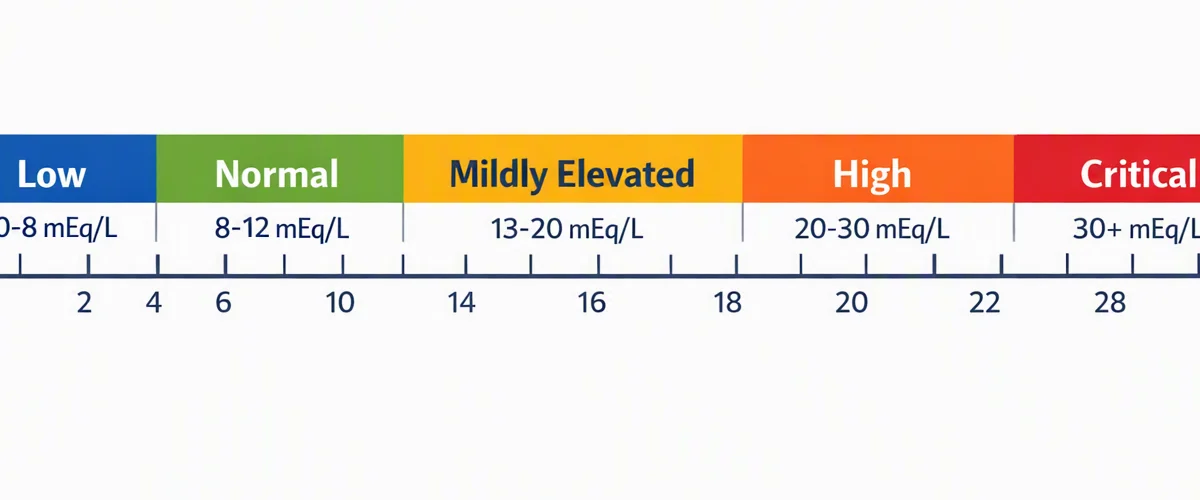
Normal Anion Gap Range and What Unexpected Results Mean
The typical anion gap usually falls within a laboratory-specific benchmark range, and the exact cutoff depends on whether potassium is included and how the analyzer reports bicarbonate and chloride. In many settings, the standard range is comparatively narrow, but your local laboratory may define slightly different normal values.
A high anion gap means there are more unmeasured acids or unmeasured ions than expected. A low anion gap is less common and often points to albumin-related effects, excess positively charged proteins, or a testing problem. A negative value is atypical and should prompt a careful review for artifact or calculation issues.
Interpretation should center on trends and context. A single abnormal result does not automatically confirm disease, but it can be an useful clue when paired with symptoms, blood gas findings, kidney function, and the rest of the electrolyte panel. In other words, the gap is a clue, not a diagnosis.
Sources of High Anion Gap Metabolic Acidosis
A high anion gap is usually associated with a metabolic acid imbalance, which occurs when acids build up or when the body fails to clear them effectively. The primary causes include excess lactic acid, ketone buildup, and renal failure. These conditions increase the amount of acid in the bloodstream, reducing bicarbonate and increasing the gap.
Lactate buildup can occur when tissues are underperfused or oxygen delivery is inadequate, leading to excess lactate production. Ketone-related acidosis may develop in diabetes, starvation, or alcohol-related illness when ketone bodies accumulate. Kidney failure reduces the kidneys’ ability to excrete acid, allowing unmeasured acids to rise.
Further causes of elevated gap metabolic acidosis include toxin exposure and certain inborn metabolic conditions, but those are beyond the core calculation itself. The important point is that a high result indicates an acid-base disorder that commonly requires prompt workup. In that setting, the calculator supports early recognition, but the underlying cause still needs investigation.
When the gap is elevated, clinicians may also consider whether the bicarbonate is low enough to explain the change or whether a mixed disorder is present. That is where the delta gap can become helpful, especially if the pattern suggests more than one process at the same time.
Sources of Reduced Anion Gap
A decreased anion gap is less common than a high one, but it can be medically important. One of the most important causes is hypoalbuminemia, since albumin is a key negative-charged protein in the blood. When albumin falls, the measured gap may also drop even if the patient has a real acid-base problem.
Other causes include hypercalcemia, which can alter the balance of measured cations and anions, and multiple myeloma, where abnormal proteins may affect the charge balance. In some cases, laboratory error or sample contamination creates a falsely low or negative result. That is why unexpected values should be confirmed before being overinterpreted.
If the result is surprisingly low, review the full electrolyte panel, the clinical situation, and whether the patient has low albumin or a paraproteinemia. A low gap does not exclude illness; it can simply suggest a different pattern of chemistry that needs a closer look.
Adjusted Anion Gap and Albumin Correction
Albumin in the blood greatly affects the anion gap because albumin is part of the normal pool of unmeasured anions. When albumin is low, the measured gap may appear spuriously normal or low. That is why many clinicians use a corrected anion gap to compensate for hypoalbuminemia.
The corrected value helps distinguish a true acid-base abnormality from a protein-related shift. This is especially important in patients with chronic illness, malnutrition, liver disease, or other conditions that reduce albumin. Without correction, a hidden high gap metabolic acidosis may be missed.
Albumin adjustment is not just a math exercise. It reflects the role of protein binding in maintaining electrical neutrality. Because albumin is a major negatively charged protein, less albumin means fewer unmeasured anions in the baseline calculation. The corrected value therefore gives a more accurate picture of the patient’s acid-base status.
In practical use, if albumin is below normal, the corrected value should be considered alongside the uncorrected result. That is often the most useful way to interpret an abnormal or borderline lab result, especially when the serum chemistry and blood gas do not seem to match.
How to Interpret Results and Frequent Calculation Errors
Good interpretation requires something beyond entering numbers. Several common issues can distort the result:
- Applying a different formula than the one the lab expects. Combining results from different collection times instead of using one sample. Leaving out albumin when a corrected value is needed. Overlooking a delta gap that suggests a mixed disorder. Missing measurement error or specimen issues in the electrolyte panel.
The delta gap is especially useful when a high gap is present. It compares the change in anion gap to the drop in bicarbonate potassium adjusted anion gap and may reveal a second acid-base disorder hidden underneath the first. This matters when the pattern does not fit a simple picture of metabolic acidosis.
It is also essential to note that the calculator is only as accurate as the measured electrolytes provided into it. If sodium, chloride, or bicarbonate values are incorrect, the final calculated value will also be misleading. For that reason, an unanticipated abnormal result should prompt a review of the specimen and the full electrolyte panel.
A practical approach is to consider three questions: Does the number fit the clinical picture? Could hypoalbuminemia explain the gap? Is there any reason to suspect laboratory error or another preanalytic issue? These questions often improve clinical interpretation more than the arithmetic alone.
When to Use the Anion Gap in Clinical Practice
The anion gap is commonly used when reviewing a metabolic panel or broader blood chemistry profile. It is especially helpful during emergency evaluation of patients with altered mental status, dehydration, suspected poisoning, severe infection, kidney dysfunction, or unexplained tachypnea. In each of these settings, the gap can provide a rapid clue about acid accumulation.
In a typical diagnostic workflow, clinicians first review the serum bicarbonate, chloride level, sodium level, and potassium level, then calculate the gap and assess whether the patient has a normal gap, high gap, or low gap pattern. From there, they decide whether to order further testing, such as lactate, ketones, kidney function studies, or albumin.
This makes the calculator useful as a screening step, but not a standalone answer. It is best viewed as one part of a larger evaluation that includes history, physical examination, blood gas testing, and follow-up labs. Used this way, it becomes a reliable guide for identifying an acid-base disorder early.
Frequently Asked Questions
How do you calculate the anion gap with sodium, potassium, chloride, and bicarbonate?
Use the formula: anion gap = (sodium + potassium) − (chloride + bicarbonate). Some clinicians omit potassium and use sodium − (chloride + bicarbonate). The key is to use the same formula consistently when comparing results and to confirm which version your lab or medical reference uses.
How to define a normal anion gap value?
A typical anion gap varies with the calculation method and the laboratory’s reference range. The potassium-including formula is usually slightly higher than the version without potassium. Interpret always the result using the local normal values reported with the electrolyte panel rather than relying on a single universal cutoff.
Why is potassium added in the anion gap formula?
Potassium is sometimes included because it is one of the measured electrolytes and contributes to the overall charge balance. However, its effect is relatively small compared with sodium, chloride, and bicarbonate. Many clinicians omit it for simplicity, but either method can be valid if used consistently.
What can a high anion gap mean?
A high anion gap usually suggests metabolic acidosis caused by accumulation of unmeasured anions, such as in lactic acidosis, ketoacidosis, or renal failure. It can also reflect other acid-base disorders or mixed conditions. The result should be interpreted with serum bicarbonate, blood gas findings, and the clinical context.
Can low albumin change the anion gap result?
Yes. Low albumin can lower the measured anion gap because serum albumin is a major unmeasured anion. In hypoalbuminemia, the corrected anion gap may reveal an abnormality that the uncorrected value hides. That is why albumin adjustment is important when the result does not match the patient’s condition.